Shifting With Change in Need for Speed: Hot Pursuit

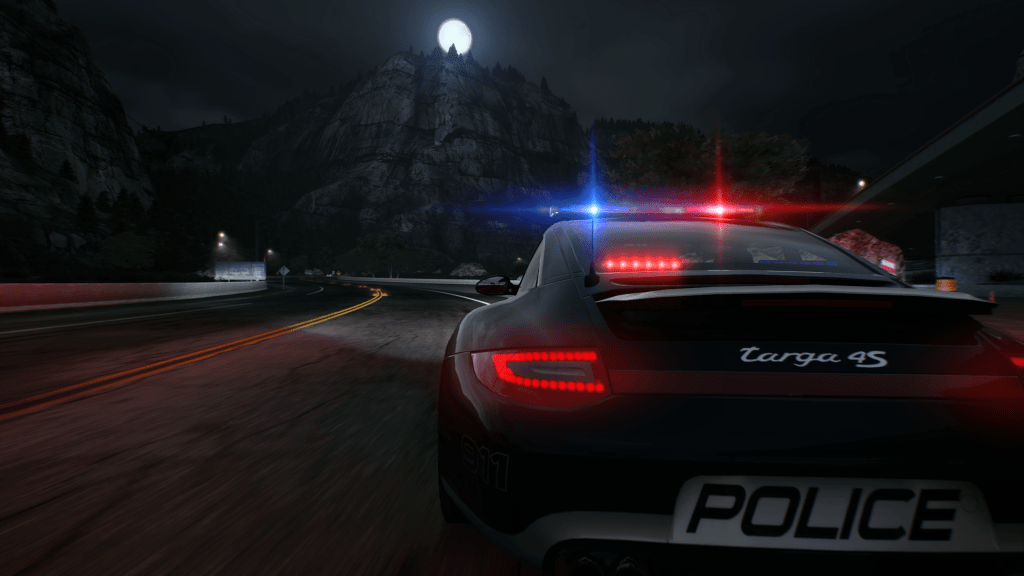
Credit: Need for Speed: Hot Pursuit Remastered. Screenshot by me. Sometimes things go wrong, it is important to accept it as part of life. Screens from Switch and Xbox One.

A year ago today I reviewed the 2020 remaster of Need for Speed: Hot Pursuit. From the jump in 2010, this was a fan favorite Need for Speed installment. It drew upon a rich history of racing and police chases to give us a game that is approachable with its arcade style, but as you reach higher levels the game expects you to do more with more. I have always been known to have a tough time with change, yet I find a high octane joy ride where things are always changing, big and small, gives me comfort to press on with whatever is making me uncomfortable.

The fact that change has always upset me makes me think it is just part of who I am. Anxiety is strong in my family. It is also a negative symptom of schizophrenia. From an early age, it seemed anything new upset me. Things that should’ve been enjoyable, even. I do not play video games nearly as much as I want to, often because of some negative feeling attached to them. Most games I enjoy alleviate this free-floating nervousness for me somehow.

Change is a natural part of life. All of life brings experience, which heralds evolution. Learning is a form of transformation. Sometimes, it is tempting for me to remain stagnant and do nothing. These are the moments we need to find the motivation to get through as much as possible. Catatonia does nothing for anyone least of all myself. I accept that to a degree it is also natural to be afraid of change. As long as you are afraid because you know the importance of doing the right thing, you are unlikely to make a truly unwise choice.

Credit: Need for Speed: Hot Pursuit Remastered. Game clip by me. Sometimes you just manage to slip through disaster with skill and luck.

I also am experiencing change through this game due to changing consoles. When I originally reviewed this remaster in 2021, it was on Xbox One. I since bought it on my Nintendo Switch and have been playing it there. Xbox is the clear victor of the two when it comes to this game. The visuals are better, and most importantly, the controls are superior. Precision joysticks and triggers with less dropped inputs. Nothing is worse than being in the heat of a race and the controller forgets you’re pressing the gas. I am still having loads of fun on the Switch, the heavy arcade style does hold its own on the platform.

In NFS: Hot Pursuit, there are parallel careers: Racer and Cop. Each has a number of event types, from standard races, to Hot Pursuits for each side where you are equipped with pursuit equipment such as spike strips, EMPs and more. Sure, it is disappointing when you spend the last quarter of a Hot Pursuit chasing one racer, only for them to get away. Yet, the several busts before the final were immensely gratifying, the entire chase was pulse-pounding, and now I have a solid amount more experience that could grant stronger equipment.

These positives encourage me to want to work toward a gold in as many events as possible. I can overcome my reservations because I know I will be rewarded, even if only with the simple pleasures of the driving fantasy and mechanics. Each attempt is unique. You never know when the enemy will cleverly place a spike strip or how well you will slip roadblocks, for example. Every event is different in terms of how it goes down. This diminishes the fear that the failure I just experienced may not be how my next try goes.

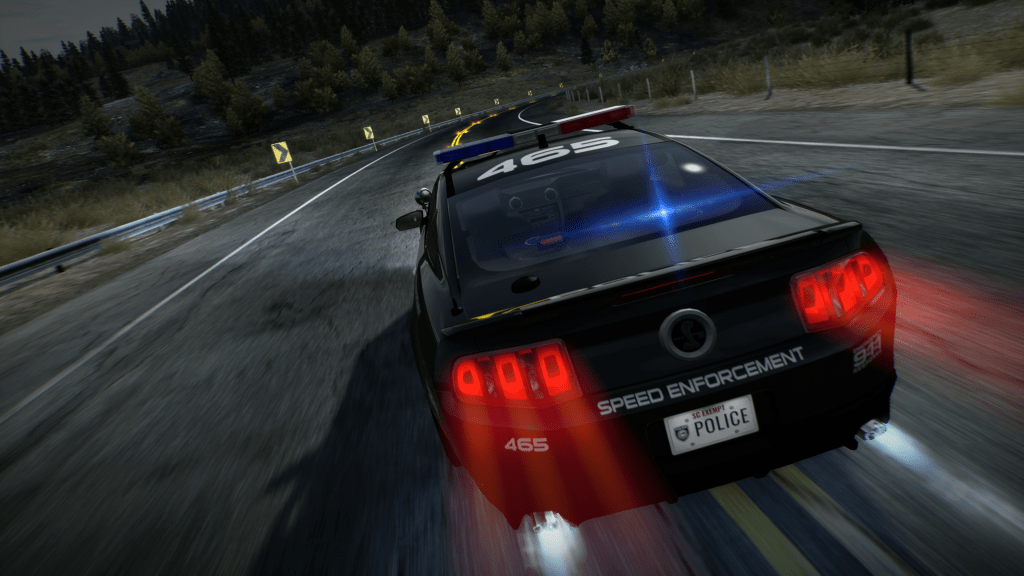
Credit: Need for Speed: Hot Pursuit Remastered. Screenshot by me. Rapidly changing conditions can make small things seem huge, and the important things small.

In many games, anxiety is part of the draw. From horror games, to games like Dark Souls, and even racing games. Getting your blood moving is why you pay the price for admission. It is a thrill ride. There is an element of fantasy, because you’re doing things in car you would never do, and the gameplay reflects this element. The overall experience is designed to be the most fun, not the most realistic. I don’t think a half hour of the game counts as cardio, but you know you’ve played as you try to manage stress within the race, and when your heart rate continues to soar after the end.

The pressure associated with playing a lot of games can keep me away from them at times, it can also draw me to them. The shifting dunes of life may start to mount, and the game may start to seem insignificant. You then turn to it for joy and release, knowing that if you put forth the effort everything will be okay. The time investment into an event is typically not too grand of an ask. Drifting through turns, evading cops, dodging about traffic, there are powerful feelings of control. Feelings that manifest truth in the form of medals in the game, and experience in both the game and life.

Even good things cause apprehension for many. I still get it before every swim practice, even though it is something I absolutely love doing. Not only that, all the effects from doing it are positive. Still, general anxiety attaches to everything and poisons it. This drowning feeling can make me catatonic. In the end, swimming helps my mental health. I can tell I am happier for going through with it. The same is generally true for NFS: Hot Pursuit sessions. Even if I lose, it is an entertaining game to play.

As I transition from college into a real job, I lean on games to keep me sane. It will be simple treasures like Need for Speed that bring me the most peace. I normally play a diverse array of games, and I’m sure that will be true, though I am more inclined to want to bash some cars around at high speed. No plot, the most basic of contexts, the focus is all on fun. Right now, I need to learn to accept defeat sometimes, knowing it will make me stronger for the next race. Work with the tools and abilities I have to get my life moving.

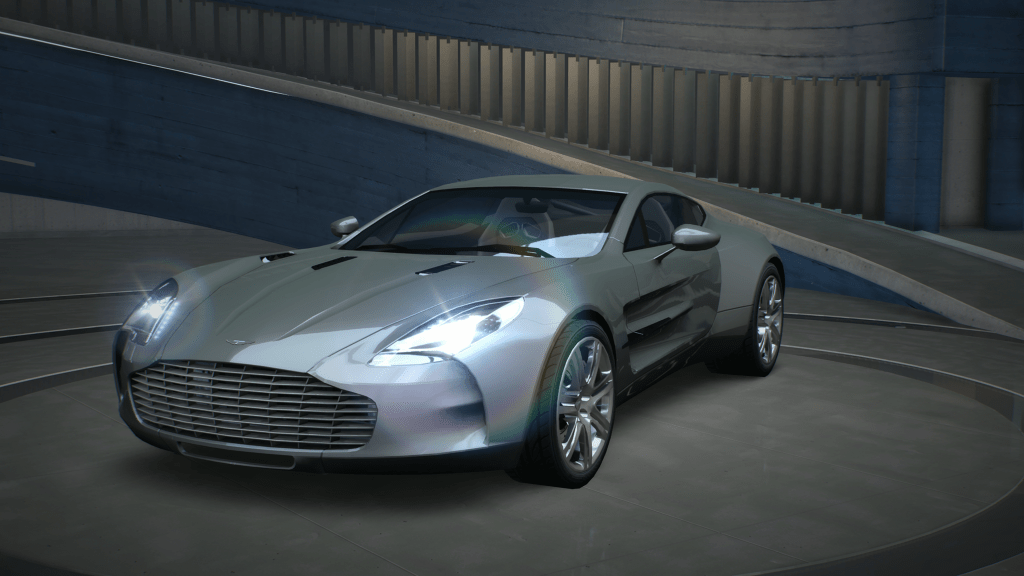
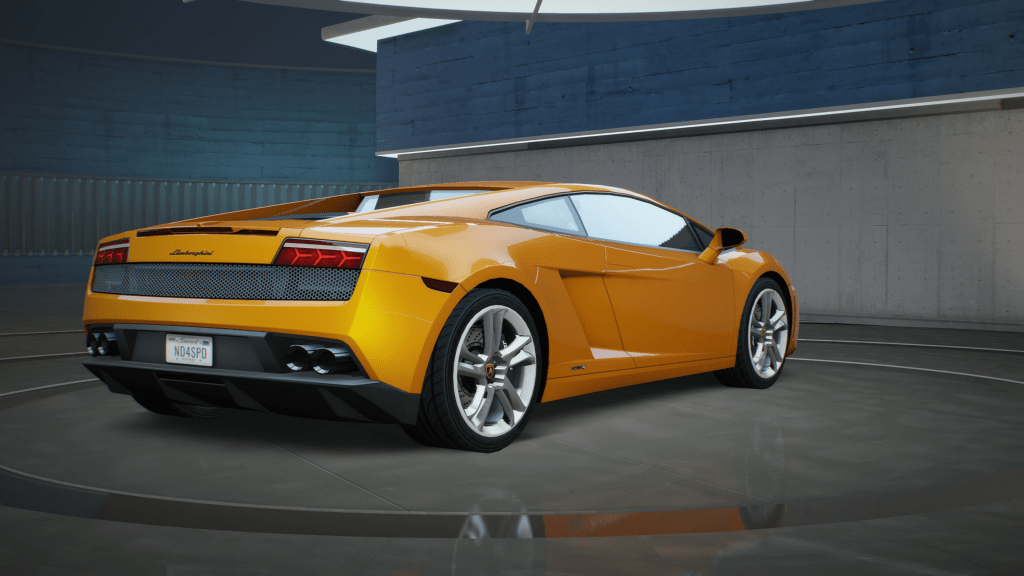
Credit: Need for Speed: Hot Pursuit Remastered. Screenshots by me.
BioShock Infinite and The Power of Recovery

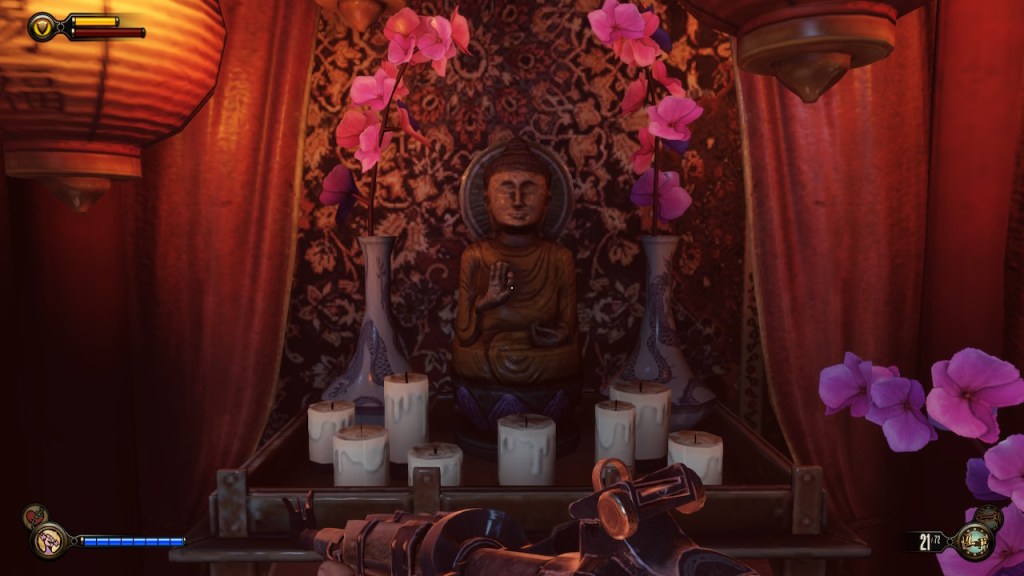
Credit: BioShock Infinite. Screenshot by me. A strictly forbidden shrine in the fictional city of Columbia, where the game takes place.

I am just beginning another playthrough of the third installment in the BioShock series, 2013’s BioShock Infinite. I reviewed this game along with the two others last September, when I got the remastered collection on Nintendo Switch. Check out those reviews if you haven’t already. And stop reading now if you are concerned about spoilers. Anyway, I cannot stop thinking about this game. Rarely do I give a game another go after beating it, to be honest, but this game keeps me coming back for more.

Not only is Infinite incredible fun, with excellent gunplay and amazing powers, but equally important is the plot. Infinite follows Booker Dewitt, in the year 1912 going to a secessionist city in the sky where a woman is being held captive. The information you’re given at the beginning: “Bring us the girl, wipe away the debt.” Not the most inspiring orders or backstories, but just fine for Booker, who is a memorable roguish type. The protagonist even having a voice is something for a first-person shooter.

I was diagnosed schizophrenic at the age of 23, following a nervous breakdown from overwhelming stress and critical lack of self care. I was in and out of the hospital three different times over the next four years as we struggled to find suitable medication. I’m happy to say I have been incident free since starting my current medication about six years ago. It is a miracle medicine I take as an injection once every three months, never missing a dose this way. During the dark period, I experienced psychosis extensively. Some of these delusions were playful in nature, others were darker, even disturbing. I found myself becoming something I couldn’t identify.

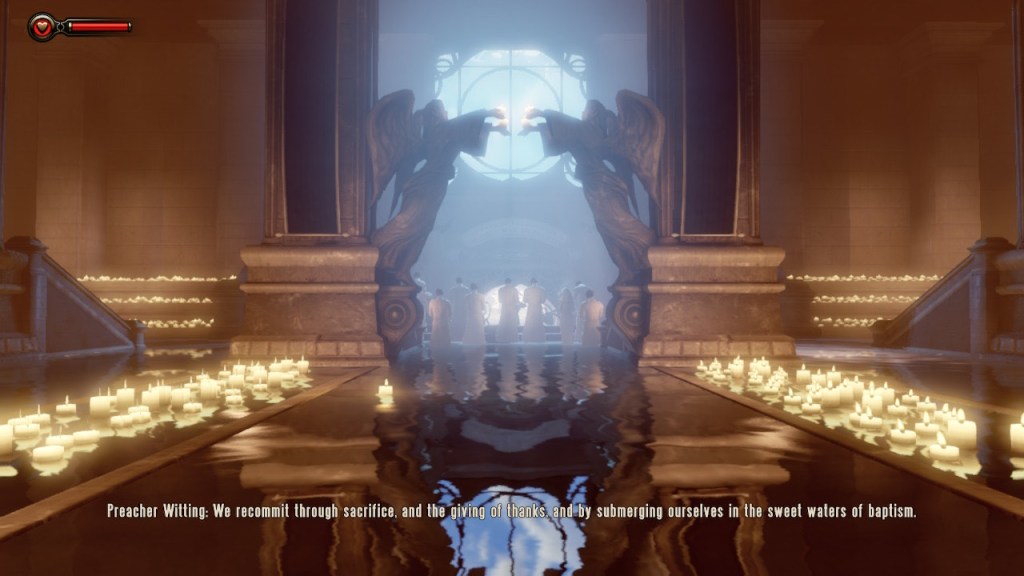
In one universe, Booker goes through with his baptism and becomes the evil Zachary Comstock, in another he doesn’t go through with the baptism. Comstock discovers Booker destitute with his baby daughter after using interdimensional travel, and convinces Booker to sell Comstock his baby daughter. You eventually discover the “debt” owed by Booker was his way of repressing the memory of selling his daughter away, and focusing on rescuing her from her prison.

Credit: BioShock Infinite. Screenshot by me. The city of Columbia, where Comstock has monuments to himself.

I believe the meaning of the end is Booker is delivered to a universe where he accepts baptism, but this Booker drowns in the process. This prevents any universe with Comstock founding his fascist city in the clouds, but not any universe where Booker still exists. Comstock, I think, is meant to be a monument to sin. Something Booker is no stranger to, but the point is there are levels of sin. And you can make choices that prevent future issues. Basically everything you see in the city of Columbia is some kind of abomination. Whether a demented museum exhibit dedicated to his exploits at the Boxer Rebellion and Wounded Knee, to a segment of the game that is literally a horror game with ghosts, to scientific abominations like the quantum particles that keep the city afloat, portaling between universes or tonics that give you super powers.

Elizabeth, your daughter, spent her whole life locked up in a small tower. Constantly being watched, unbeknownst to her. No contact with the outside world besides books, and the ability to open portals to other universes that kept her under lock and key. From the beginning, her understanding is that her ability is some form of wish fulfillment. When you are low on health, she opens a portal to some medkits, when you cannot possibly complete the story objective, she takes you to a universe where you can. She eventually has the barriers holding back her power destroyed, and finds she is actually omniscient. Able to see into any reality.

These barriers coming down is how diagnosis felt to me. Even though it was a long road ahead, sitting there and hearing those words meant coming home from a war of uncertainty I had been fighting my whole life. I have always remembered having mental health issues that have manifested themselves in diverse ways. Difficult to diagnose. There are infinite universes of possibility with how your mental illness will affect you specifically. The solution, as Elizabeth knows, is staying away from universes where you become a version of yourself you hate. For me, this means regular check-ins with both my psychiatrist and therapist, as well as taking my medication regularly. On top of other general self care things.

Credit: BioShock Infinite. Screenshot by me. Regular exercise may surprise you by improving overall health, including mental.

At one point, Booker asks Elizabeth, “Do you really think a dip in the water is going to change the things I have done?” As if to say, of course it will not. The key is to foster universes that can live with those things. Booker spoke something similar to Elizabeth earlier when she asked him how he deals with everything he has been through, to which he replies he does not, he just learns to live with it.

This struggle is the story of recovery. There’s no magic river that is going to wipe away what you’ve experienced, or what you are, but you can fight for a universe that you can accept. It may not always feel like the universe accepts you, but I think of diagnosis as a medal on my uniform and treatment my shield. When Booker and Elizabeth enter a particular universe, they find that in this one, Booker died a martyr in the anti-Columbia/Comstock revolution. Your Booker is so puzzled to find the posters saying he is martyr, because he would never lay his life on the line for anybody.

Sometimes I look back on my journey see amazing progress. I have been very depressed, anxious, paranoid, and overwhelmed by feelings that are hard express. Nowadays I am pretty chill. I find enjoyment in every day, I surround myself with things that are positive, and I am always staying in treatment to keep healthy. It might have all been for my own gain ultimately, but that doesn’t defeat the sacrifice I have made. Much like the “revolutionary” Booker Dewitt. I identify with Booker Dewitt, as we both see our history as the debt I have to pay to myself for knowing how it feels to be truly lost.

Mental health analysis of video games is my number one passion. I intend to do this frequently on Twitch as soon as I can afford a decent setup. My old Mixer setup just doesn’t cut it anymore. I love sharing my story, and the little bit of knowledge I gained studying psychology on the side at university. There’s still so much more I could say about this game; it resonated deeply with me. Please leave a comment to tell me how you feel, go check out my reviews of the BioShock collection, and play it for yourself if you haven’t.

Credit: BioShock Infinite. Screenshot by me. The initial baptism at the entrance to Columbia, in which Booker goes through the motions to gain entry.