Overdue Review: Dragon Quest 11 S: Echoes of an Elusive Age Definitive Edition

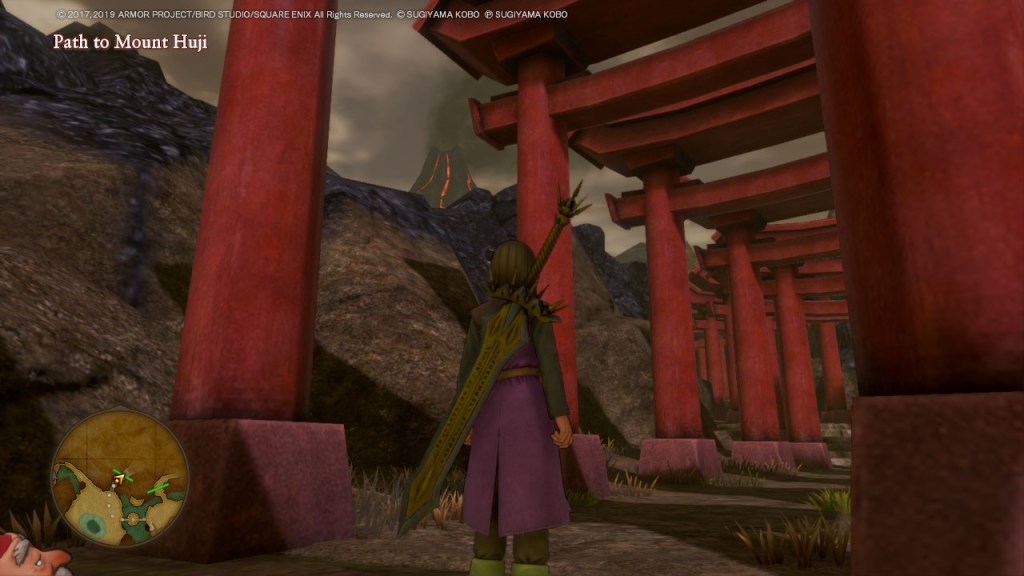
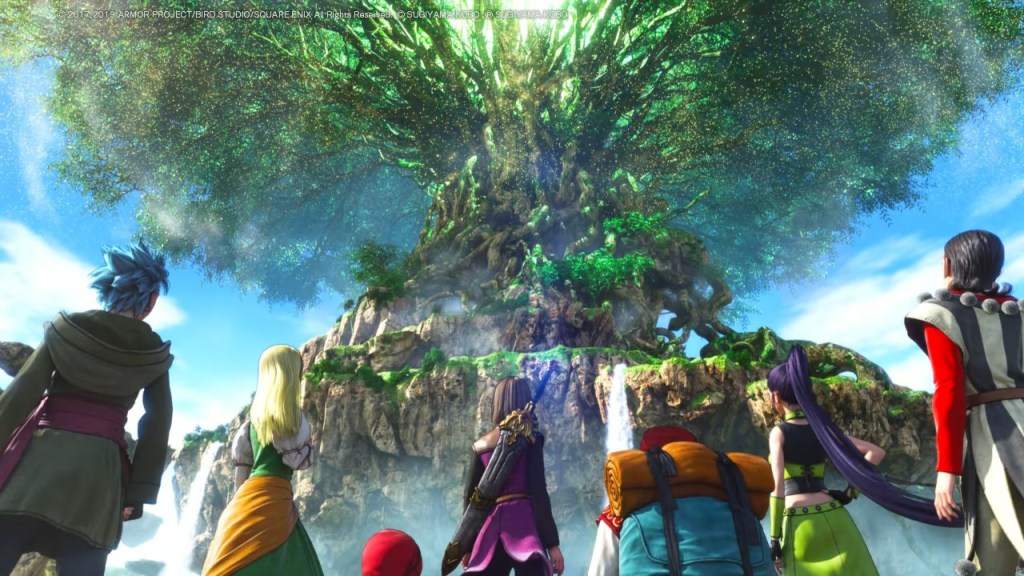
Credit: Dragon Quest 11. Screenshot by me. Intro cinematic showing the party and Yggdrasil, the World Tree.

The Japanese role playing game is a fairly new concept to me. It isn’t a genre I have ever given much attention to until playing Octopath Traveler, now one of my favorite games. Dragon Quest 11 was an excellent next step. With a vibrant world, fun characters, cool enemy design and more to bring to the table, I can see why this game generally rates highly. The Definitive Edition brings heaps more onto an already strong deck. Released by Square Enix initially in 2017, the Definitive Edition, which I strongly recommend, rolled out 2019-2020.

Dragon Quest 11 follows the adventures of the protagonist hero, the heralded “Luminary” of legend. Meant to extinguish a supreme, malicious force of darkness, the Luminary’s path isn’t laid out like you might think. In the beginning the whole world seems against them. As you slowly build your strength and renown, more people come to the light. Including your merry band of fighters. At times the quest seems insurmountable, but with a lot of grinding and a little good luck, they might save the day.

The mechanics of DQ11 are classic turn-based RPG. Nothing too spicy here, but they do wonderful things with the recipe they use. There is the option to move about the combat space, but this does nothing other than keep you more engaged should you feel the need. I personally went with a classic line-up for most of the game. I want to focus on the best play, above all else. You’ll grind for experience and loot, something I actually enjoyed in this game. The music, while good, can be a little repetitive, so I found many of my sessions played with an album in the background.

Credit: Dragon Quest 11. Screenshot by me. Glimpse of battle mode. Wherever your encounter happens in the game world is where the battle takes place, which is neat.

I played over 60 hours just on the main story. In the Definitive Edition, there is additional in-game content such as story missions, classic Dragon Quest levels, and even the ability to play the entire game in classic 2D style. There is also extra endgame content, including new chapters that I will get to soon. In my time the story certainly had its moments, some bits that really surprised or connected with me, but overall not super impressive. Somewhat generic light versus dark, good versus evil. There is a refreshing fantastical, whimsical element to the tale that made it a nice escape.

The story does a solid job keeping the game going, which is ultimately what I wanted. The turn based battle system is so smooth, with tons of room to experiment and customize. Each character has a unique background and skill tree. I found myself eager to learn about them, and build them into the best soldier for my party. Healing proved to be a very powerful force on any team. There is no weird gimmick to the combat, and as a newcomer to the genre I appreciate that, as I think would many players. This is a very approachable RPG.

I do not remember ever needing a guide for this game. The one time I looked was to make sure I was a high enough level for the end boss, which according to sources I was more than enough. I still had a phenomenal time with the ending. Intense fight, got a little bit of good luck along the way, but that doesn’t diminish the fact I fought expertly. The satisfaction of taking down a tough boss in this game can really move you when you’ve been leveling forever to beat them. I greatly appreciate a game that doesn’t take a lot of outside knowledge to enjoy. I don’t terribly mind using guides occasionally, but the best is not needing one.

The visual style feels familiar, ultra cute and is quite appealing. In part to the distinct artistic styling of Dragon Ball’s Akira Toriyama. A mash-up of cultural influences make up the fantasy world Erdrea. From Arab style architecture, to Japanese archways, or clearly distinct European atmosphere. At the core of the story is a Norse myth, Yggdrasil, the world tree. The reverence for this tree helps unite a world with a lot of different people in it. The soundtrack is very well done, if lacking a bit of variety. I’m not saying the soundtrack is bad, just sparse.

Credit: Dragon Quest 11. Screenshot by me. Using the in game photo mode is cool, if lacking features.

I haven’t felt a lot of resonance within Dragon Quest 11, more anything just enjoying the fun times, and letting it remind me to see the world as a place of light. Sylvando reminds me it is worth fighting for smiles. Merely existing is not enough, and he will follow the Luminary to the end of all things to restore them to the world. Every character has parts that I like, for example the thief, Erik, is also incredibly noble. The old man, Rab, is so persistent. Quitting is not something he will ever consider. Not when he lost his kingdom, his kin or anything.

In the grand scheme of things, there are a few things that really impress me about Dragon Quest 11 S. First, how much more content there is in the Definitive Edition. Worth every penny. Second, how much I liked this game despite, even in thanks to, its simplicity. They pull off a lot with a rather simple formula. Third, it got me into a classic series I had no idea existed, until I saw this game on Twitch at launch. It intrigued me then, and I’m so glad I played it now.

Hope is an overarching theme in DQ11, and I have hope for the next installment, which is currently in development. No release date yet, as production is still early. I believe I will be playing the endgame content of DQ11S, and perhaps try some of the game in 2D. Both sound interesting. I have a few other JRPGs on deck to dive into, and I am looking forward to those as well. I recommend this game to anyone who is a fan of the genre, or just looking to start out. I’m a newcomer and had a fantastic experience playing Dragon Quest 11 S.
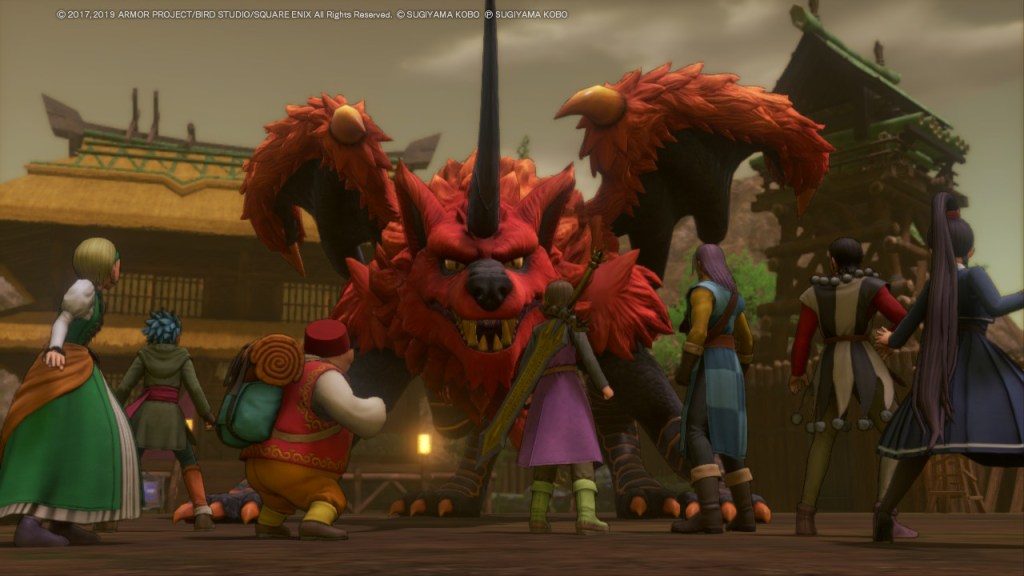
Credit: Dragon Quest 11. Screenshots by me.
Retro Review: BioShock (2016 Remaster)

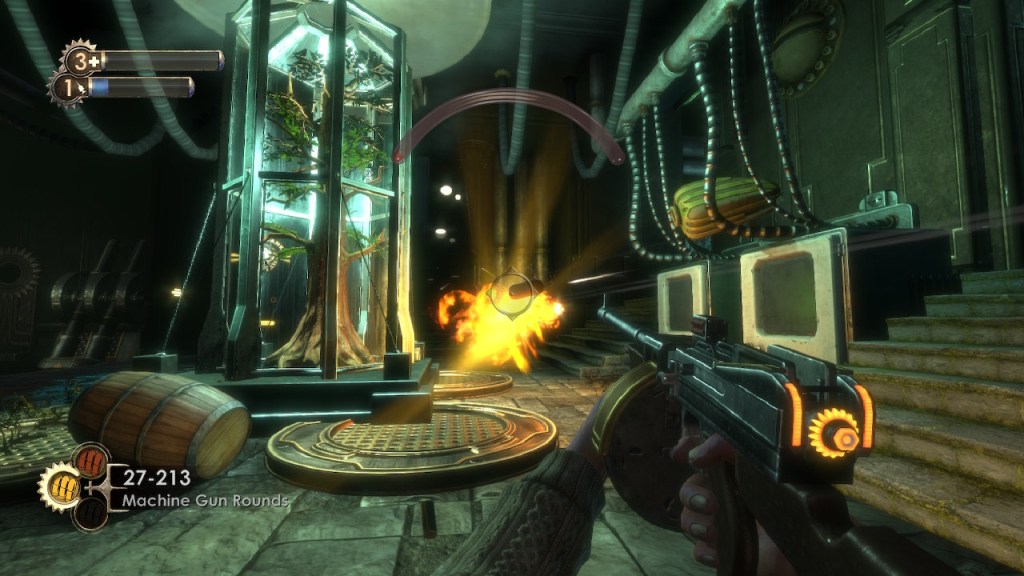
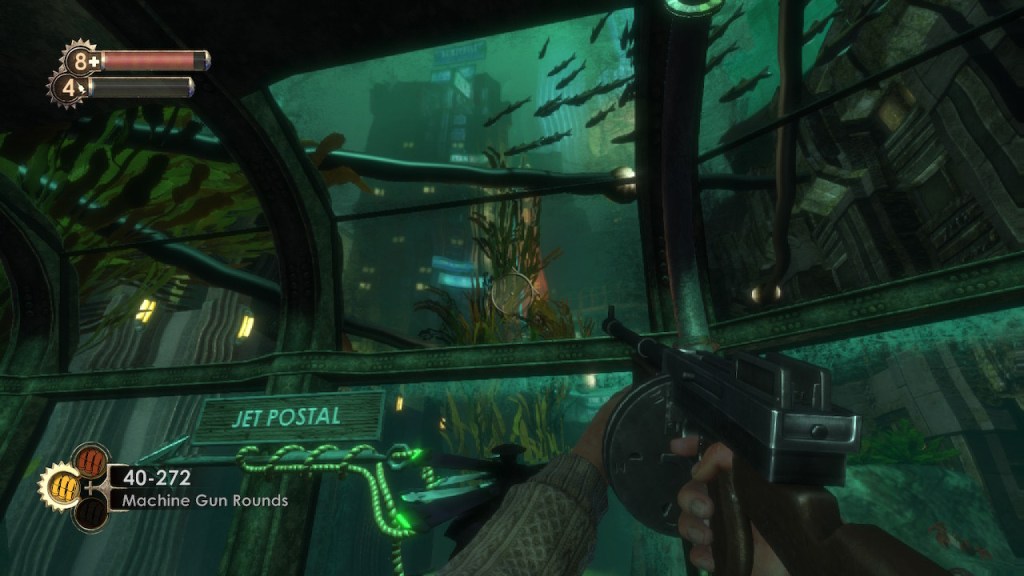
Credit: BioShock. Screenshot by me. The underwater city of Rapture makes for a breathtaking setting in this FPS/RPG hybrid.

BioShock was a game I bought when it first came out. There was a lot of hype around this game. I remember loving it enough to play through twice to get both endings and on different difficulties. It was unlike anything I had ever played, and playing the remaster on my Nintendo Switch reminded me how great this game is to this day.

Initially developed by 2K Australia and 2K Boston, BioShock was released in 2007 to critical acclaim. In 2016 a remastered BioShock trilogy was released by Blind Squirrel Games. The game blended RPG-like elements into a first-person shooter. It is about an Ayn Rand inspired dystopian city under the ocean away from society, and the player finding themselves there dealing with a crumbling gilded cage where power is everything, and economics runs completely unchecked.

There is a tremendous attention to detail in BioShock. The way the plot is laid out, introduced and enhanced by optional diaries about the world, the balancing of combat, the constant trickling in of tougher enemies. It often appears there is no aspect of the game that hasn’t been carefully thought out. The remaster comes with director’s commentary, from which you can learn many of the concepts were well established early, but they were making adjustments up to the final moments before release. Never resting on their laurels, development was a constant process of improvement, it seemed.

What the player is rewarded with is a game whose impact is undeniable. Without revealing plot details, I will say the story is one that will stick with you, as it has with me. There are phrases and scenes that are unforgettable. The blending of RPG and FPS is something which has really taken off since this game, one of my favorite games, Borderlands, included. There are other striking Borderlands parallels: the importance of vending machines, economics run amuck as a theme and being 2K games are all similarities. RPG elements such as upgradeable action skills and passive abilities, player choice having an impact on game outcome, diversity of player build and choice to name a few influences from role-playing games. According to the director’s commentary, the goal was to make an enhanced FPS, not a diluted RPG.

Credit: BioShock. Screenshot by me. Using one of my interchangeable powers, Hypnotize Big Daddy, to get this brute to come to my aid in battle.

The atmosphere of 1950’s inspired decorations, grandiose architecture, and the omnipresent reminders that you are leagues under the sea in a horrifying, decaying dystopia wherein human genetic splicing has ruined the population, which is honestly the least of some of the tragedies of the city, Rapture.

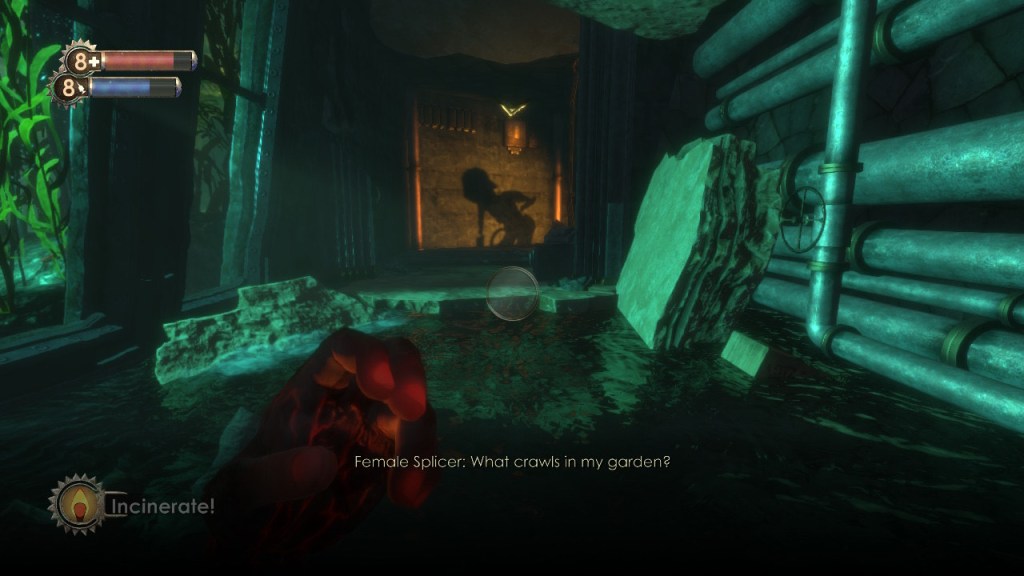
When I say Rapture is “horrifying,” I couldn’t pick a better term. It is fair to call this game horror adjacent. The themes are very mature, involve children being killed and commodified, there is body horror of modifying yourself to produce electricity or to have an insect swarm living in your hand, for example. The themes aren’t the only thing giving this game a loose horror tag. The gameplay dynamic involves careful resource management on any difficulty. Health is taken quickly. The game is often dark. There are numerous things that make me say this game is touching on survival horror, while not going the whole nine yards in the genre.

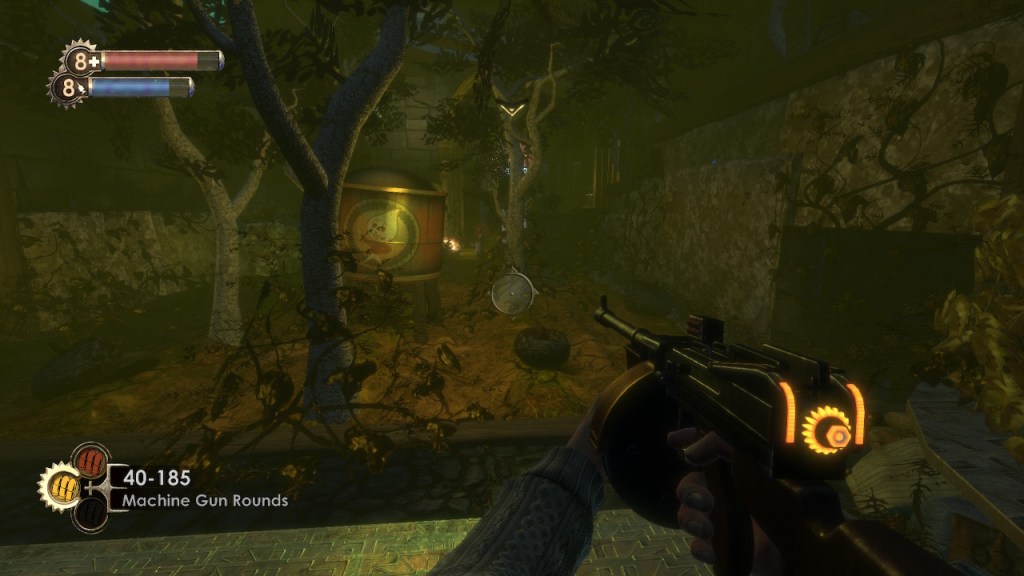
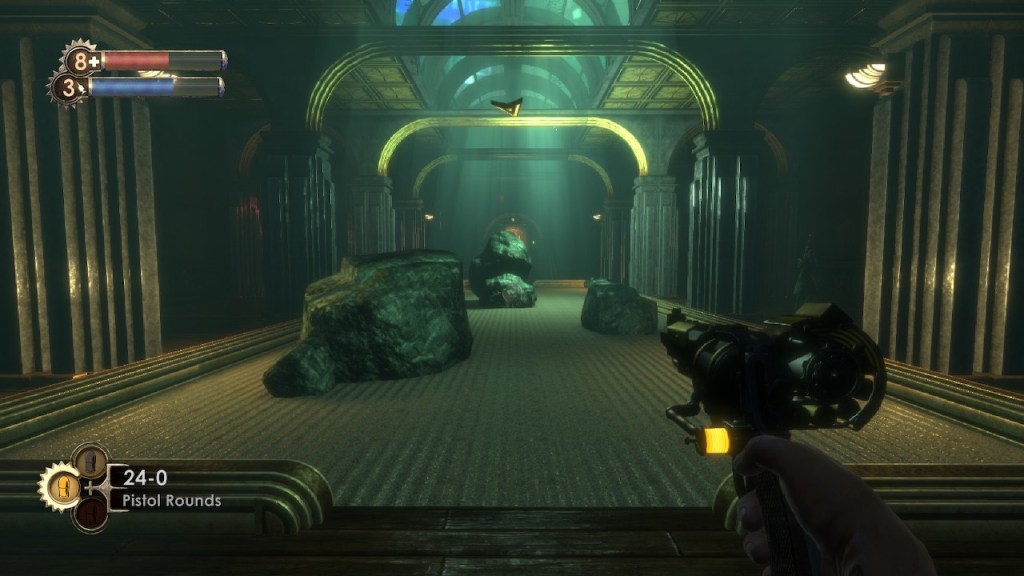
Visually, this game was top notch when it came out. The remaster does it justice, and there is a recent rumor of a remaster update coming with ray-tracing. Seeing this game in HD is spectacular. Rapture comes alive. So many times, I found myself just admiring the scenery. I took far more screenshots and videos than I will post here, just for personal memories. The voice acting is executed well, and sound design is immersive.

The game took me well over fifteen, even twenty hours to beat. I was a bit of a completionist. I left no level without fully exploring it, and doing all the side stuff I could. You may beat it in significantly less time on an easier difficulty, or just charging through the game. I played on Normal, the second of four difficulties. So, it may even take you longer if you play on Hard or Survivor.

Credit: BioShock. Game clip by me. Fighting an acrobatic enemy.

No matter what difficulty you play on, I suggest saving as often as possible. You can do it from the pause menu at any time, and you’ll save a lot of heartache this way. The only thing you lose when you die is that you must go to the nearest respawn point, and whatever you spent fighting the thing that killed you is lost, the latter of which turns out to be taxing.

One thing that is neat about BioShock is that there really is no useless weapon. Even the melee weapon has its uses, not the least of which is resource management. The only weapon I will say I hardly used was the Chemical Thrower. All guns have multiple ammo types, and even this weapon has at least one useful type. The Trap Bolts on the Crossbow are also tricky, but do a lot of damage if you can foresee an ambush.

I would recommend this game to anyone that wants to experience a true classic FPS. BioShock is a piece of gaming history, I don’t think anybody can deny that as a fact. It took so many bold steps, and the developers fought for those steps. I came to expect so much more from an FPS after this game. More story, diversity of experience, risks, atmosphere and just overall resonance.

It was both nostalgic and fun to visit Rapture again. There were certain environments I remembered vivid details of, but the world in this game is so rich you could play a dozen times and still appreciate parts. I can’t wait to explore the next two games in the collection, which I have never played before, but have heard nothing but top-shelf comments about. Rapture is such an interesting place, I’m glad the second game brings us back for more stories to be told. Then, the third game, BioShock Infinite, tells an original story in a city in the sky.

Credit: BioShock. Screenshots by me.