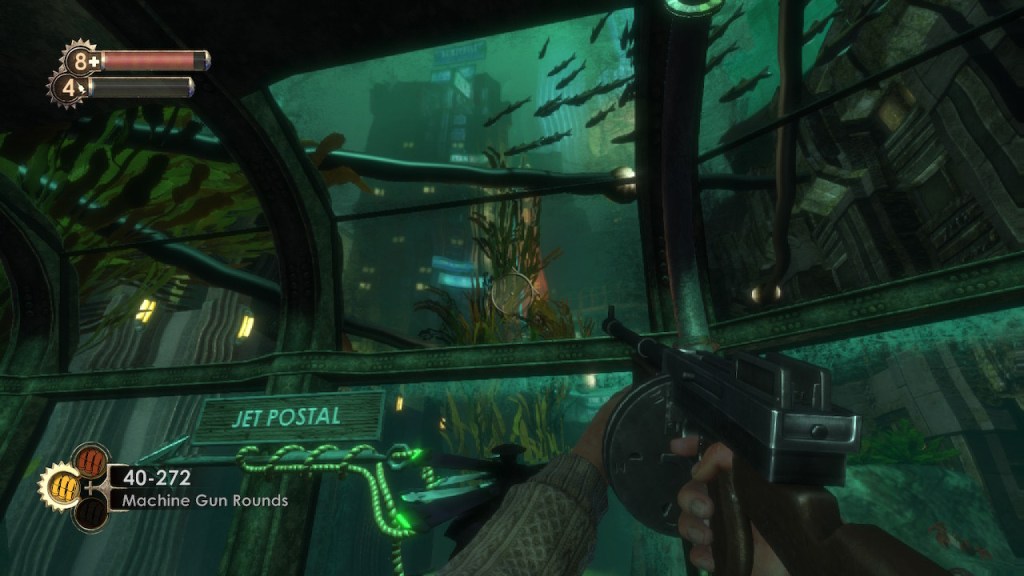
BioShock was a game I bought when it first came out. There was a lot of hype around this game. I remember loving it enough to play through twice to get both endings and on different difficulties. It was unlike anything I had ever played, and playing the remaster on my Nintendo Switch reminded me how great this game is to this day.
Initially developed by 2K Australia and 2K Boston, BioShock was released in 2007 to critical acclaim. In 2016 a remastered BioShock trilogy was released by Blind Squirrel Games. The game blended RPG-like elements into a first-person shooter. It is about an Ayn Rand inspired dystopian city under the ocean away from society, and the player finding themselves there dealing with a crumbling gilded cage where power is everything, and economics runs completely unchecked.
There is a tremendous attention to detail in BioShock. The way the plot is laid out, introduced and enhanced by optional diaries about the world, the balancing of combat, the constant trickling in of tougher enemies. It often appears there is no aspect of the game that hasn’t been carefully thought out. The remaster comes with director’s commentary, from which you can learn many of the concepts were well established early, but they were making adjustments up to the final moments before release. Never resting on their laurels, development was a constant process of improvement, it seemed.
What the player is rewarded with is a game whose impact is undeniable. Without revealing plot details, I will say the story is one that will stick with you, as it has with me. There are phrases and scenes that are unforgettable. The blending of RPG and FPS is something which has really taken off since this game, one of my favorite games, Borderlands, included. There are other striking Borderlands parallels: the importance of vending machines, economics run amuck as a theme and being 2K games are all similarities. RPG elements such as upgradeable action skills and passive abilities, player choice having an impact on game outcome, diversity of player build and choice to name a few influences from role-playing games. According to the director’s commentary, the goal was to make an enhanced FPS, not a diluted RPG.

The atmosphere of 1950’s inspired decorations, grandiose architecture, and the omnipresent reminders that you are leagues under the sea in a horrifying, decaying dystopia wherein human genetic splicing has ruined the population, which is honestly the least of some of the tragedies of the city, Rapture.
When I say Rapture is “horrifying,” I couldn’t pick a better term. It is fair to call this game horror adjacent. The themes are very mature, involve children being killed and commodified, there is body horror of modifying yourself to produce electricity or to have an insect swarm living in your hand, for example. The themes aren’t the only thing giving this game a loose horror tag. The gameplay dynamic involves careful resource management on any difficulty. Health is taken quickly. The game is often dark. There are numerous things that make me say this game is touching on survival horror, while not going the whole nine yards in the genre.
Visually, this game was top notch when it came out. The remaster does it justice, and there is a recent rumor of a remaster update coming with ray-tracing. Seeing this game in HD is spectacular. Rapture comes alive. So many times, I found myself just admiring the scenery. I took far more screenshots and videos than I will post here, just for personal memories. The voice acting is executed well, and sound design is immersive.
The game took me well over fifteen, even twenty hours to beat. I was a bit of a completionist. I left no level without fully exploring it, and doing all the side stuff I could. You may beat it in significantly less time on an easier difficulty, or just charging through the game. I played on Normal, the second of four difficulties. So, it may even take you longer if you play on Hard or Survivor.
No matter what difficulty you play on, I suggest saving as often as possible. You can do it from the pause menu at any time, and you’ll save a lot of heartache this way. The only thing you lose when you die is that you must go to the nearest respawn point, and whatever you spent fighting the thing that killed you is lost, the latter of which turns out to be taxing.
One thing that is neat about BioShock is that there really is no useless weapon. Even the melee weapon has its uses, not the least of which is resource management. The only weapon I will say I hardly used was the Chemical Thrower. All guns have multiple ammo types, and even this weapon has at least one useful type. The Trap Bolts on the Crossbow are also tricky, but do a lot of damage if you can foresee an ambush.
I would recommend this game to anyone that wants to experience a true classic FPS. BioShock is a piece of gaming history, I don’t think anybody can deny that as a fact. It took so many bold steps, and the developers fought for those steps. I came to expect so much more from an FPS after this game. More story, diversity of experience, risks, atmosphere and just overall resonance.
It was both nostalgic and fun to visit Rapture again. There were certain environments I remembered vivid details of, but the world in this game is so rich you could play a dozen times and still appreciate parts. I can’t wait to explore the next two games in the collection, which I have never played before, but have heard nothing but top-shelf comments about. Rapture is such an interesting place, I’m glad the second game brings us back for more stories to be told. Then, the third game, BioShock Infinite, tells an original story in a city in the sky.


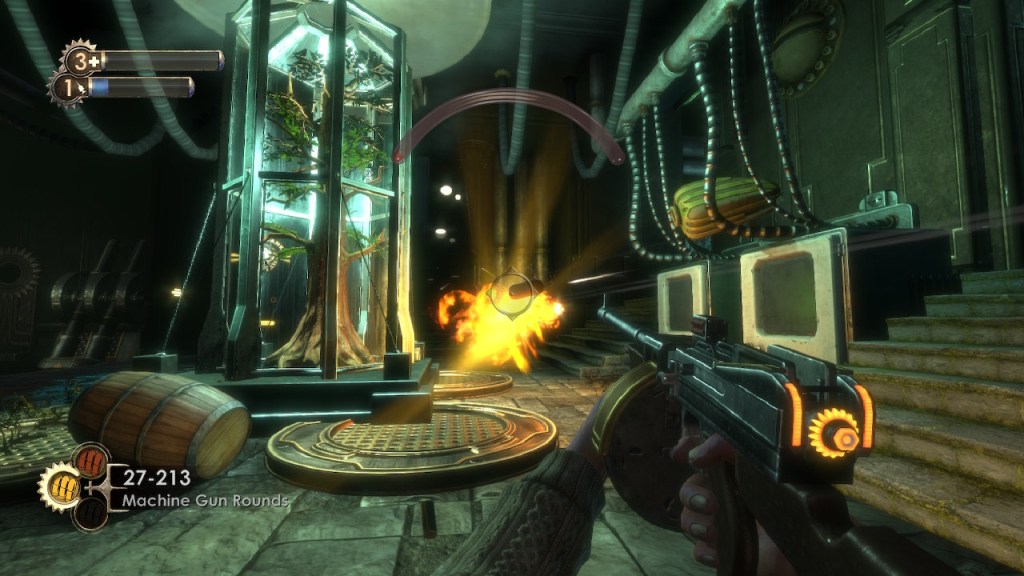

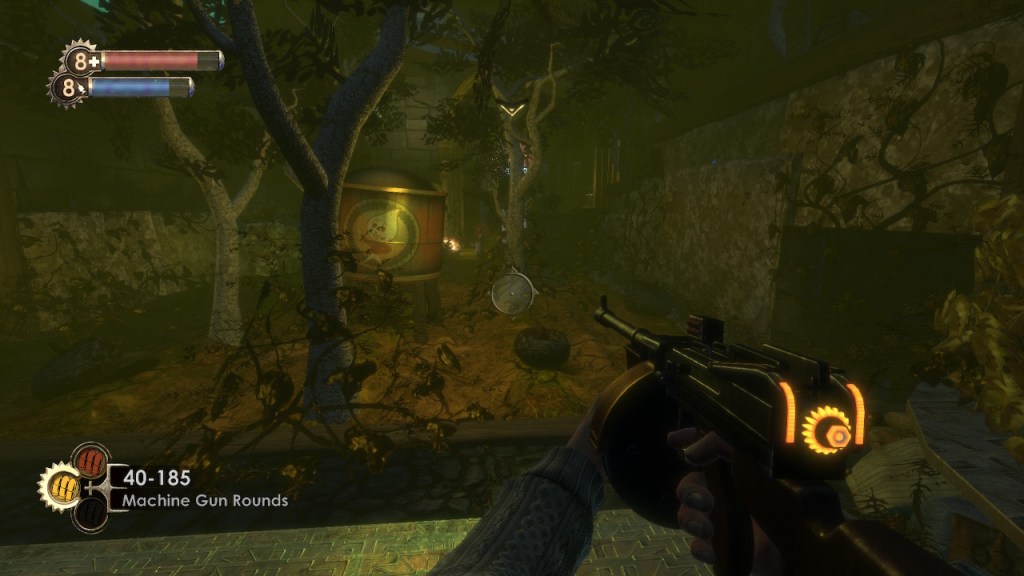
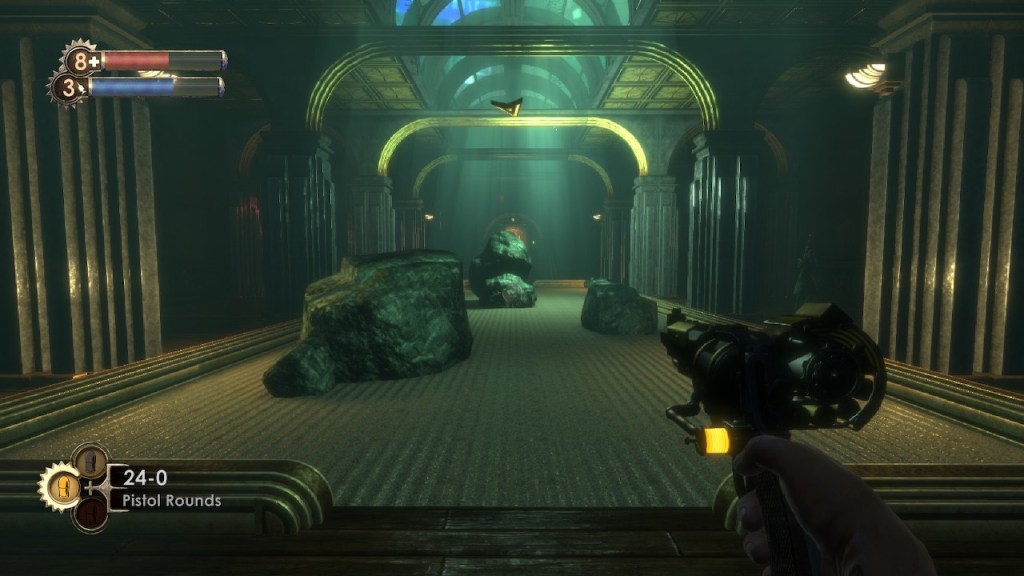

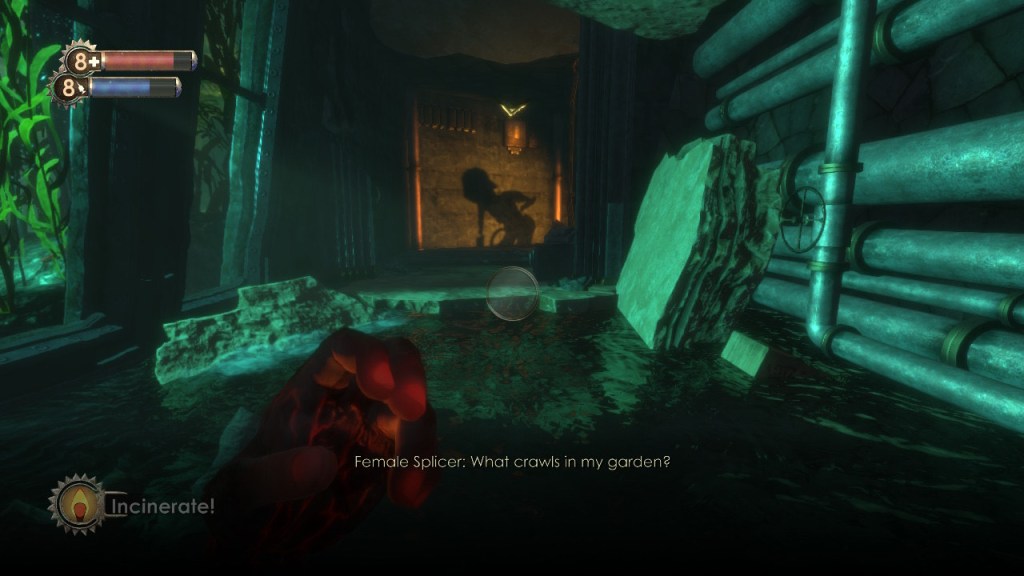
Credit: BioShock. Screenshots by me.

 HereticDerek